Soundbar Or Subwoofer Explained: A UK Buyer's Guide
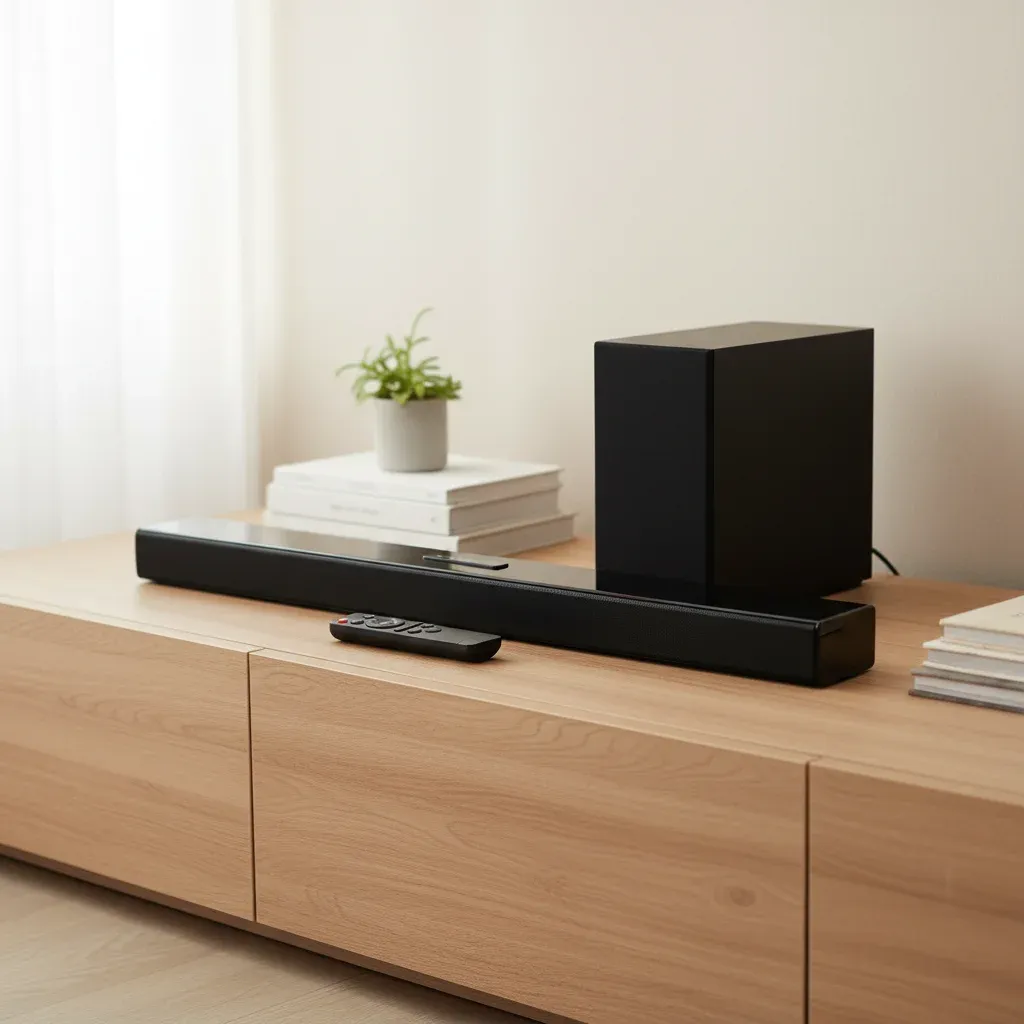
If you are deciding between a soundbar or subwoofer, the best first buy for most UK households is a soundbar, because it improves dialogue, overall clarity and day-to-day TV sound straight away. A subwoofer adds deeper bass, but on its own it will not fix muffled voices or narrow, thin audio. Therefore, if you want the biggest upgrade from standard TV speakers, start with a soundbar or choose a 2.1 system that includes both.
TL;DR: Choose a soundbar first if your TV sounds unclear, quiet or flat. Choose a subwoofer only if you already like your current speakers and simply want more bass. For many British homes, a 2.1 soundbar system with subwoofer is the most balanced option because it improves speech and adds cinematic low-end without overcomplicating setup.
Choosing between a soundbar or subwoofer can feel more complicated than it should. However, many UK shoppers are trying to solve the same problem: thin TV sound, hard-to-hear speech and films that never quite feel cinematic at home. The good news is that you do not always have to choose one or the other. Instead, the best approach is to understand what each component does, then match that to your space, your viewing habits and your budget.
At Hisense Audio, the focus is simple: deliver the ultimate soundbar upgrade for your UK home. Based on our testing of typical living-room setups, many households get the best results from an all-in-one 2.1 channel system that adds both clearer dialogue and the low-end depth people usually miss from built-in TV speakers.
Key takeaways
- A soundbar improves overall TV audio, especially dialogue clarity, width and everyday usability.
- A subwoofer handles deep bass, adding impact to films, sport and games.
- If you are comparing soundbar or subwoofer, the soundbar is usually the better first purchase because it fixes more of the TV’s core sound issues.
- A 2.1 channel system combines both benefits: cleaner speech from the bar and stronger bass from the subwoofer.
- UK buyers should consider room size, neighbour friendliness, flat living, connection options and value for money before buying.
If you want a broader overview of how these systems work together with televisions, see The Ultimate Guide to Soundbar And Subwoofer For Tv in the UK. This article takes a tighter look at the specific question many buyers ask before they spend: should you buy a soundbar or subwoofer?
What is the difference between a soundbar and a subwoofer?
What does a soundbar do?
A soundbar is a speaker system designed to sit below or near your television. It usually contains multiple drivers in one slim unit and is built to improve the parts of audio that standard TV speakers struggle with most: speech intelligibility, stereo separation and overall fullness.
Modern TVs are getting slimmer, but physics has not changed. As a result, thin cabinets leave less room for powerful speaker drivers. That often means voices can sound flat or buried under background music and effects. A good soundbar tackles that directly.
What does a subwoofer do?
A subwoofer is dedicated to low-frequency sound. In other words, it reproduces bass: the rumble of explosions, the weight of drums, the roar of a crowd and the sense of scale in a film soundtrack. On its own, though, a subwoofer is not designed to replace a full speaker system for dialogue or general listening.
This is where some confusion starts. A subwoofer adds impact, but it does not solve muffled voices by itself. So, if your main frustration is turning subtitles on because you cannot follow conversations clearly, a subwoofer alone will not be enough.
Do you need both a soundbar and a subwoofer?
If your aim is cinema-style performance at home, a combined system often makes more sense than treating these as competing products. A 2.1 setup gives you left/right audio reproduction through the bar plus dedicated bass through the subwoofer. That balance is why it remains such a practical choice for British homes.
Hisense Audio leans into this sweet spot with an all-in-one 2.1 channel approach built around cinematic depth and crystal-clear dialogue rather than complexity for its own sake.
Should I buy a soundbar or subwoofer first?
For most UK buyers, start with the soundbar.
That recommendation comes from how televisions are actually used day to day. Most households are watching dramas, soaps, live sport, streaming series, documentaries and general entertainment far more often than they are chasing extreme bass effects. In those situations, better clarity matters more than extra rumble.
Why is a soundbar usually better as a first upgrade?
- Dialogue becomes easier to hear, particularly in drama and news content.
- The overall soundstage gets wider, so audio feels less trapped inside the TV chassis.
- Volume can be lower while remaining clearer, which helps in family homes and flats.
- Setup is straightforward, often using HDMI ARC/eARC or optical connection.
When should you buy a subwoofer first?
A subwoofer-first approach only makes sense in narrower cases: for example, if you already have decent speakers but want greater low-end energy for action films or gaming. For most people upgrading from ordinary TV audio, it will not address the most obvious weakness.
If you are weighing up TV compatibility as part of your purchase decision, our guide to TVs With Soundbars Explained: A UK Buyer's Guide covers what to look for when pairing audio gear with modern televisions sold in Britain.
Ready to transform your TV with Hisense Audio?
Upgrade Your Audio — £19.99