Soundbar for open plan living room uk: what actually matters
For a soundbar for open plan living room uk setups, prioritise dialogue clarity and controllable bass over maximum boom: open-plan kitchen–lounge spaces and shared walls reward speech-focused modes and restrained low frequencies more than sheer volume.
Direct answer: prioritise dialogue clarity and controllable bass over maximum boom in open-plan spaces
Open-plan living spreads sound into hard surfaces, corridors and neighbouring rooms. Built-in TV speakers often lack midrange clarity, so speech can disappear under music and effects. A practical approach is to favour dialogue-oriented listening, ease bass emphasis, and add a soundbar when the set’s own speakers are not clear enough for everyday TV and films.
In homes with thin walls or party floors, dialogue-focused bars and controlled low-frequency settings matter more than chasing maximum bass that travels through structure. That principle fits open-plan UK flats and terraces as well as traditional living rooms.
Daypart schedule: daytime news, evening films, late-night low disturbance
Match modes to the clock rather than running one “cinema” preset all day.
- Daytime news and chat shows: use a speech, news or dialogue-leaning EQ so voices stay forward without turning the whole room up.
- Evening films: a movie-oriented mode can widen the mix, but keep bass moderate so effects do not dominate speech or travel into adjoining spaces.
- Late-night viewing: night or listening modes that soften loud peaks while lifting quieter dialogue help you stay intelligible at lower overall volume.
Setup basics still apply: connect via HDMI ARC where available, set the TV’s audio output to ARC or receiver, then pick EQ labels such as Movie, Music or News to suit the programme. Bluetooth pairing is useful for casual music, but keep levels sensible in shared housing.
Feature checklist: speech/news mode, night-friendly dynamics, compact footprint
When shortlisting a soundbar for open plan living room uk use, check for capabilities that support clarity and neighbour-friendly control rather than marketing superlatives.
- Speech, news or dialogue modes — or streaming/TV speech settings — to bring voices forward when midrange is weak.
- Night-friendly dynamics — modes that reduce sudden loud peaks and support quieter late viewing.
- Controllable bass — EQ or level controls so you can dial down low frequencies that travel through floors and party walls.
- Compact footprint — a bar that sits cleanly under or near the screen without dominating a kitchen–lounge run of furniture.
- Straightforward TV connection — HDMI ARC (or optical where needed) with clear TV-side ARC/receiver settings.
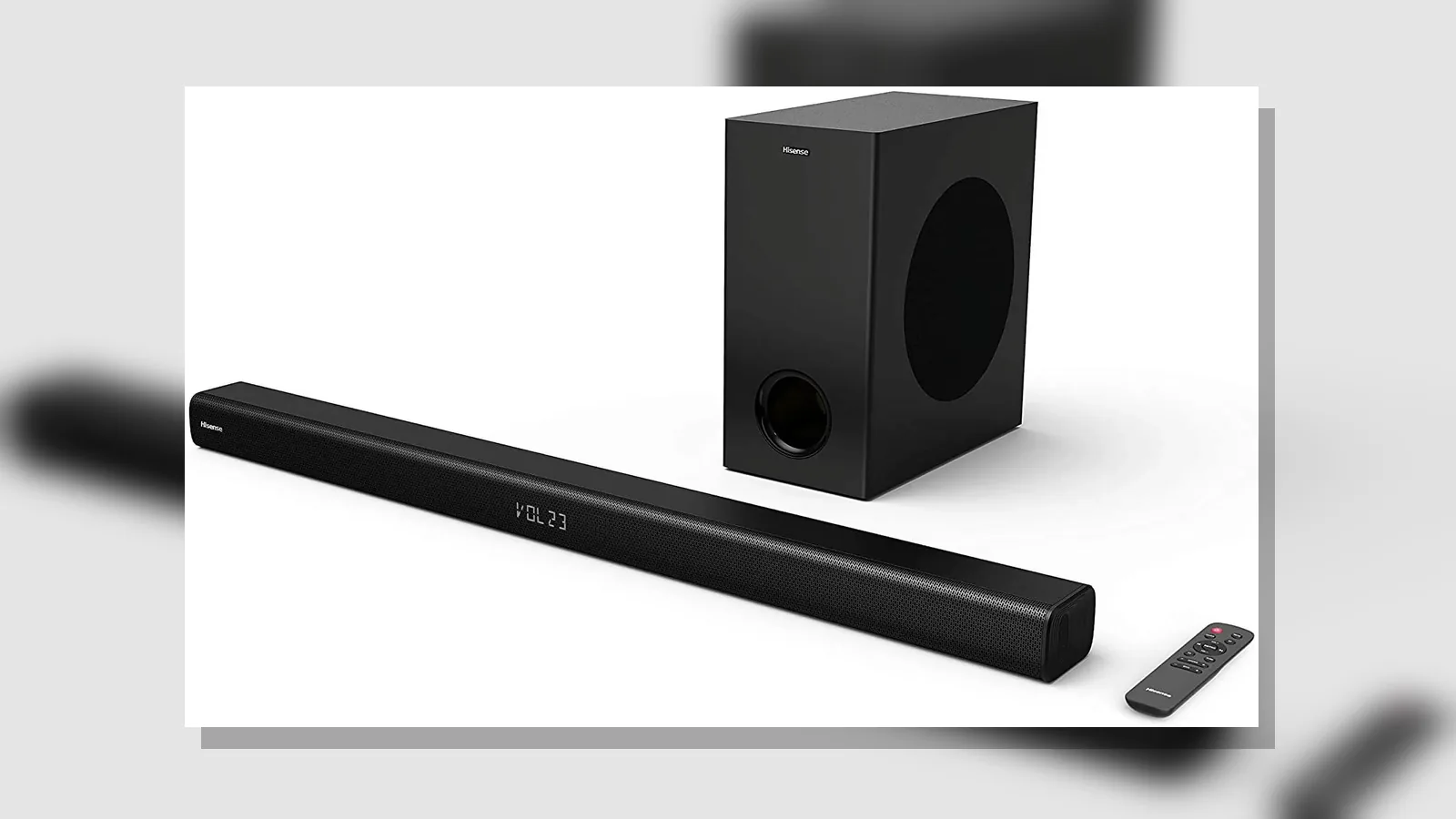
When a separate wireless sub is the wrong buy for shared floors
A separate wireless subwoofer can be the wrong purchase if you share floors or thin walls with neighbours. Extra low-frequency energy is often what transmits furthest; in that case, dialogue clarity and restrained bass settings usually serve you better than adding another bass source.
If you already have a bar-plus-sub system, try reducing sub level first, using night or speech modes, and avoiding “maximum bass” presets before you assume you need more hardware.
Soft CTA to compact 2.1 built-in-sub option
If you want a compact path that keeps bass in one tidy unit rather than a separate floor-standing sub, review the current product details for a compact soundbar option and judge connection labels and listening modes against the checklist above—without assuming unstated power figures or neighbour-noise results.
FAQ
What matters most for a soundbar in an open-plan kitchen lounge?
Clear dialogue and controllable bass. Open-plan rooms amplify boom and mask speech; speech or news modes plus moderated low frequencies usually help more than turning everything louder.
Will a louder bar fix hard-to-hear dialogue?
Not reliably. Try speech or streaming dialogue settings, reduce bass emphasis, and consider a soundbar when TV speakers lack midrange clarity, rather than raising master volume alone.
How do I keep late-night TV quieter for neighbours?
Use night or listening modes that reduce loud peaks while lifting quieter speech, keep overall volume down, and avoid heavy bass presets that travel through walls and floors.
Do I need a separate wireless sub in a UK flat?
Often not, if shared floors or thin walls are a concern. Controlled bass on the bar itself is usually a safer starting point than adding a dedicated subwoofer.